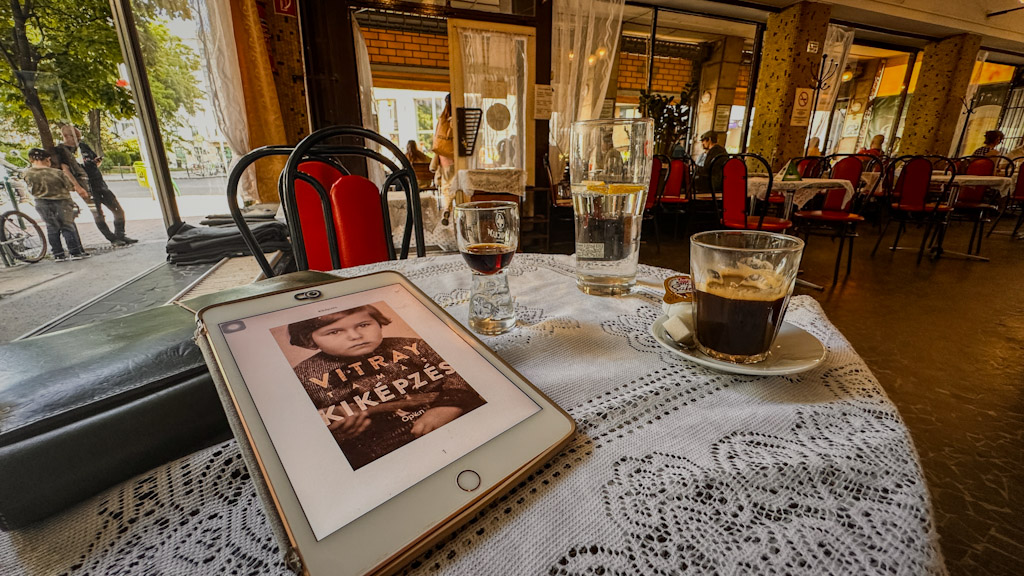


A mark of a good book is when it begins to wear you down as you approach the end. These are the moments when the reader feels the thinning weight of the remaining pages — or simply taps the screen and, after a quick calculation, knows: it’s almost over. Soon, the book will have to find its place on the shelf.
And in these moments, something shifts. The magic of the book gets tangled with that quiet, inevitable feeling: damn it. A brief, anticipatory sense of loss. A small kind of grief.
This is one of those books. One that recently found its way into my hands.
As you read, a rare and vivid biographical story unfolds — one that leads you through the horrors of our modern history, yet does so with a strange lightness, almost as if you were following the adventures of a child, alive to the world, running wild on a city playground.
It begins with the inner-city horrors of the 1940s. With moments when entire generations simply vanish. With life chattering its way out from beneath the rubble. Liberation. Explosions. Dust. Fragile hope.
Then comes a new system — disturbingly reminiscent of mechanisms we’ve seen fail in more recent times in Hungary — where it didn’t take much to grind human lives down.
And still: hope. The idea that after life’s grind, something awaits. That something will come — will come — as triumph.
So let it come.
Because it’s worth reading: Kiképzés – Vitray Tamás
Not because it’s easy.
But because it matters.
And I hope this book will one day be translated into many languages — including English. Because reading matters.